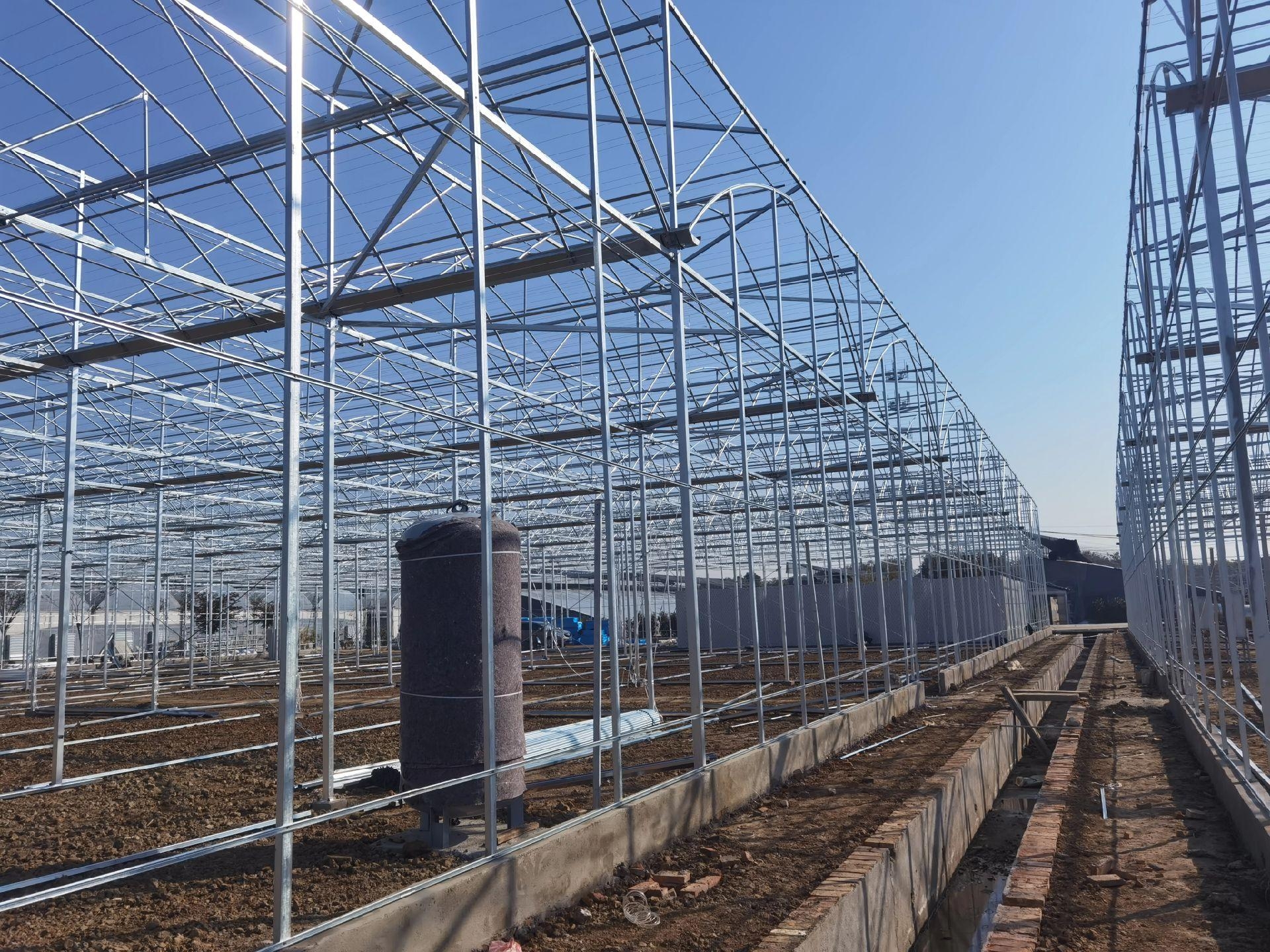
Design around heat and humidity first
Tropical greenhouse design should begin with ventilation. In Malaysia, Thailand, the Philippines, Indonesia, Vietnam, and similar climates, enclosed structures can overheat quickly. Natural ventilation, side openings, roof vents, shade cloth, and insect netting are often more important than heavy insulation.
Rain shelter greenhouse vs full greenhouse
Many Southeast Asian farms need a rain shelter greenhouse to reduce crop disease pressure, protect seedlings, and keep work aisles usable during wet weather. A multi-span film greenhouse can be configured with high side openings, gutter drainage, insect screen, and crop-specific shade.
Use insect net and shade carefully
Insect netting helps protect vegetables and nursery plants, but it also reduces airflow. The structure should balance mesh density, side height, roof venting, and fan options. Shade cloth can reduce heat load for leafy greens, seedlings, flowers, and nursery crops.
When tunnel greenhouses fit tropical farms
A single-span growing greenhouse is useful for smaller vegetable farms, seedling zones, and phased expansion. It is simpler to install and easier to test before expanding to multi-span production.
Information to send for a tropical greenhouse quote
- Country, farm location, and rainy season conditions.
- Crop type: vegetables, seedlings, flowers, nursery plants, or aquaculture support.
- Preferred covering: film, insect net, shade cloth, or mixed covering.
- Ventilation preference: open sides, roof vents, fans, or natural ventilation.
- Width, length, gutter height, and destination port.