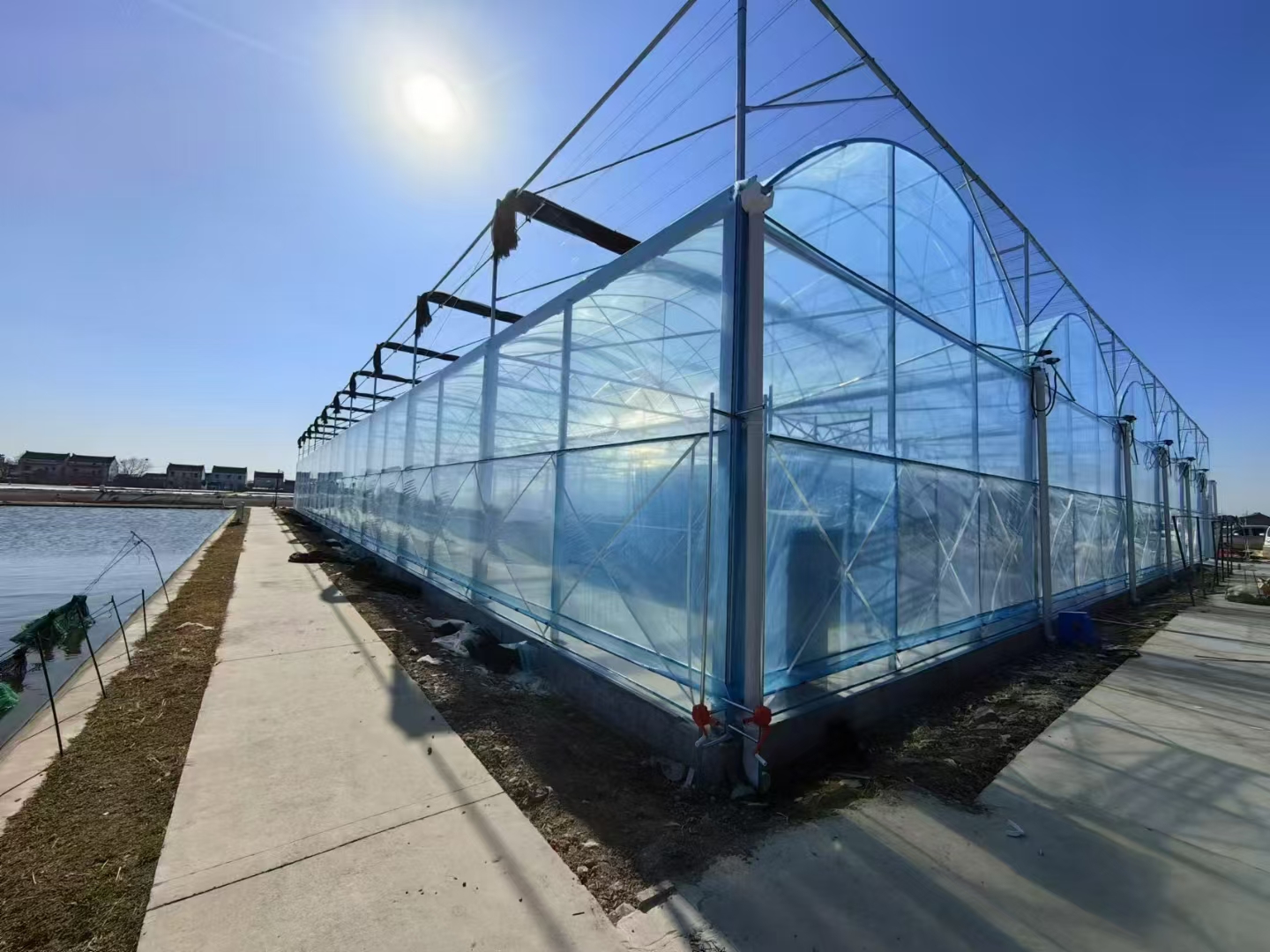
Natural ventilation should be planned early
Side openings, roof vents, bay spacing, and greenhouse height affect airflow before any fan is added. For warm climates, the structure should make it easy for hot air to leave and cooler air to enter without creating dead zones inside the crop area.
Insect netting changes airflow
Insect net is important for vegetables, seedlings, and nursery plants, but it creates resistance to airflow. If insect protection is required, the greenhouse may need larger vent areas, higher side walls, circulation fans, or exhaust fans.
Shade and cooling are part of ventilation planning
Shade cloth reduces solar load and can make ventilation more effective. Some commercial greenhouse kits add wet pad and fan cooling, but many farms should first evaluate natural ventilation, shade, and crop layout.
Match ventilation to greenhouse type
A single-span tunnel greenhouse may use roll-up sides and simple end doors. A multi-span film greenhouse can use roof vents, gutters, fans, and shade. A Venlo glass greenhouse can integrate roof ventilation with more complete climate equipment.
Quote checklist
- Local high temperature, humidity, and rainy season pattern.
- Crop height, planting density, and worker aisle layout.
- Covering material: film, PC panel, glass, shade, or insect net.
- Vent preference: side roll-up, roof vents, fans, or combined system.
- Whether the project needs manual or motorized operation.